


AMERICAN NURSE EXAM PREP 2026
4.84.00 Reviews
App Specs
- Version
- 2.1.020
- Updated On
- License
- Free
- Downloads
- 10,000+
- Developer
- Prepia Inc
- Categories
- Education
- Platform
- Android
Screenshots
 Analysis by AppCompare
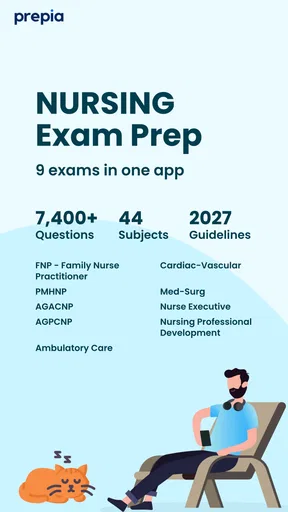
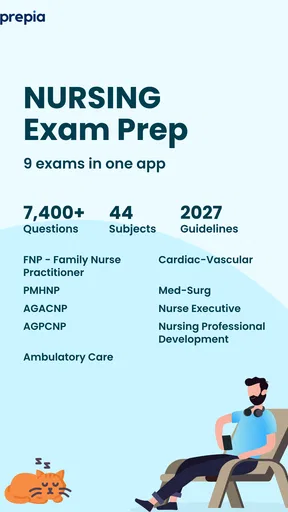
Preparing for a nursing examination is rarely just a matter of finding more questions. The useful material has to be readable when I am tired, focused enough for a short study break, and organized well enough that I can tell what I still need to learn. AMERICAN NURSE EXAM PREP 2026 is an education app from Prepia Inc that brings practice questions and study guides together for several nursing paths, including PMHNP, MEDSURG, and AGACNP. I found its strongest appeal in that focused exam-preparation purpose rather than in trying to be a complete nursing reference.
The app is free to install, with optional purchases ranging from $9.99 to $49.99 per item. That makes it easy to try before committing money, although the in-app purchase structure is something I would examine carefully before building an entire study plan around it. It is rated for Everyone, runs on Android 7.0 or later, and the current version is 2.1.020. Its average rating is 4.8 from around 149 ratings, while its install count has passed 10K, so it has attracted a modest but real group of learners.
How the study experience handles different readers and routines
I find that the most useful way to judge this app is to look beyond how quickly I can answer a question and ask whether its study material can work for different reading habits and daily schedules. In this section, I consider how I would adjust the pace and format of a session to stay engaged without mistaking convenience for learning. That leads naturally to the practical routines where this focused approach is most valuable.
Readability and navigation matter more than decoration
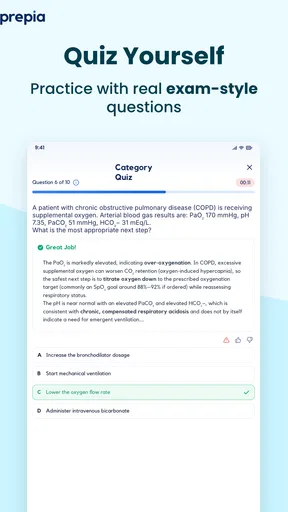
For an exam app, I care less about visual flair than about whether I can understand a question without fighting the interface. A good session should let me move from a prompt to the answer choices and then to the explanation in a predictable order. That is especially important for nursing learners, who may already be processing unfamiliar terminology, clinical priorities, and several plausible answers at once.
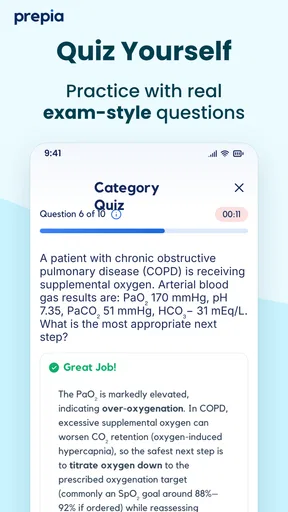
AMERICAN NURSE EXAM PREP 2026 is most useful when I treat it as a structured practice space rather than as a casual quiz. The combination of questions and study guides gives me two different ways to approach a topic: I can test what I remember, then return to explanatory material when a mistake exposes a gap. That workflow is more helpful than repeatedly guessing until an answer feels familiar.
The app’s subject coverage is also relevant to readability. A learner preparing for PMHNP needs to think differently from someone reviewing MEDSURG or AGACNP material. Keeping the exam direction in mind while reading a question reduces the mental effort of deciding whether a detail is relevant. I would still check the selected subject before every session, especially if I am studying for more than one nursing specialty, because mixing tracks can make progress harder to interpret.
My practical approach would be to use the study guides first for orientation, then answer a small group of questions without looking back, and finally review every explanation connected to an uncertain response. This is a better use of the app than rushing through a large batch simply to see a high completion count. The important result is not how many prompts I touched; it is whether I can explain why the correct option takes priority over the alternatives.
Worth Reading Before You Choose

Flipboard Shows What News Apps Must Do Beyond the Feed

Switching to Android Auto Means Rethinking Your Driving Routine

Google Calendar Makes a Crowded Week Easier to Manage

Ludo King Makes the Most of the Minutes Between Plans

Baby Panda World Brings Quick Play to Modern Phones, but Its Game Library Feels Busy

ESPN’s Live Game View Makes Following Close Games Easier
Short sessions can be easier to sustain
The format suits learners who cannot reserve a long, uninterrupted evening. A nurse commuting, waiting between responsibilities, or taking a brief break can open a focused practice session instead of carrying a textbook everywhere. That makes the app a practical companion for repetition, provided the learner has enough concentration to engage with clinical questions rather than answer them automatically.
There is a useful distinction here between convenience and accessibility. A phone-based study tool can be easier to reach than printed notes, but convenience does not guarantee that every learner will find the text, controls, or explanations comfortable. I would use the device’s own display and text settings where available, and I would test the app during a normal study period rather than assuming that a quick download tells me everything about long-term comfort.
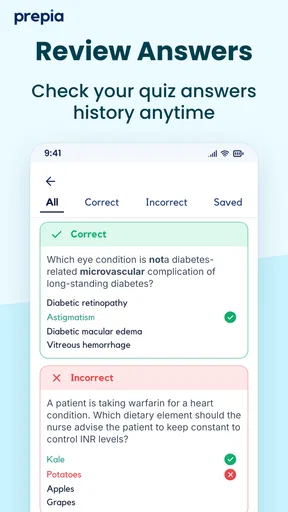
One non-obvious benefit of question-based study is that it reveals the kind of mistake I make. I may know a disease process but miss the question because I overlook urgency, patient safety, or the wording of the task. I recommend keeping a simple error log outside the app with three headings: knowledge gap, wording mistake, and priority mistake. That turns the app into a diagnostic tool for my study habits instead of just another source of scores.
Clear purpose helps reduce cognitive overload
Because the app is specifically aimed at American nurse examinations, it has a narrower purpose than a general medical encyclopedia. That focus can be reassuring when I need exam-oriented practice, but it also means I should not expect it to replace clinical guidelines, formal coursework, instructor feedback, or supervised experience. I would use it to rehearse reasoning and identify weak areas, not to make patient-care decisions.
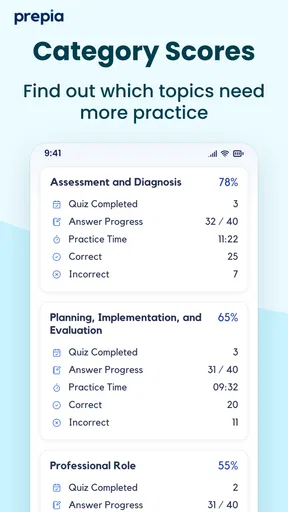
For learners who are easily overwhelmed by too many resources, the app can provide a simpler starting point: choose the relevant nursing track, read the associated material, and practice. For learners who need extensive customization, visual organization, or a detailed long-term analytics system, the experience may feel less complete than a dedicated learning platform. The right choice depends on whether focused repetition is more valuable to you than a large ecosystem of tools.
Motor and sensory considerations during practice
Mobile study places demands on vision, touch, and attention. A learner with limited hand dexterity may find rapid tapping or small answer targets tiring, while someone with visual sensitivity may prefer a larger screen or a particular display setting. I would not judge the app only from a short interaction; I would complete a full question, read the explanation, and navigate back and forth several times to see whether the physical effort remains manageable.
There is also a sensory issue that is easy to overlook: dense clinical language can be tiring even when the font itself is comfortable. Long stems, abbreviations, and closely related answer choices require sustained visual attention. I found that reading the question once for the broad clinical situation and a second time for the exact task helped me avoid unnecessary rereading. That technique is useful for anyone, but especially for learners whose concentration is affected by fatigue or visual strain.
If touch interaction becomes uncomfortable, I would switch from rapid-fire practice to slower review sessions. Reading a guide, answering fewer questions, and writing down the reasoning can preserve the learning value without turning the app into a speed test. The trade-off is that this approach takes longer, so the app works best when I adapt the pace to my abilities rather than treating its question flow as a requirement.
Audio support, specialized display behavior, and compatibility with every assistive setup are areas I would personally test before purchasing study content. I would not assume that an education app designed for mobile use will automatically fit a particular sensory need. The free entry point is valuable here: it lets a learner check basic comfort and navigation before spending on additional material.
Situational access: where the app fits into real life
Imagine a nurse finishing a shift with twenty minutes before collecting a child from school. Opening a short practice session could be more realistic than beginning a chapter in a large review book. I would choose one specialty, answer deliberately, and use the remaining time to inspect explanations for missed or uncertain questions. If the shift was exhausting, I would avoid judging performance too harshly; a tired session may tell me as much about timing and concentration as it does about exam knowledge.
Another realistic use is the final review period before a planned study block. I might use the guides to identify a topic, answer questions on it, and then stop when my errors begin to come from rushing. That stopping point is important. More questions are not automatically better when attention has dropped, and an app cannot compensate for sleep, proper breaks, or a study plan that is too ambitious.
The phone format also helps people who move between locations, but it can be a disadvantage in noisy or interrupted environments. Clinical work, public transport, and family responsibilities can break concentration at exactly the moment a question requires careful prioritization. I would save the most demanding practice for a quiet setting and use short mobile sessions for reinforcement. This two-context approach is more realistic than expecting one device to serve every learning situation equally well.
For learners with limited or inconsistent internet access, I would test the app under the conditions in which I actually plan to study before buying content. The same applies to device age and storage comfort. The stated minimum operating system is Android 7.0, which supports older Android devices, but compatibility on paper does not tell me whether a particular phone will feel comfortable for reading clinical explanations. A tablet or larger phone may be preferable for extended review, while a smaller device may be fine for quick checks.
What it does better than familiar alternatives
The usual alternative is a printed review book. Books can be excellent for deep reading, annotation, and a stable study sequence, especially for learners who prefer paper or need to avoid screen fatigue. This app is more convenient when I want to turn spare minutes into active recall. It also makes it easier to switch from reading to answering questions without carrying separate materials.
Another alternative is a broad medical reference app. That kind of resource may be better for looking up a definition or reviewing a general clinical concept, but it can be less direct when the goal is exam preparation. AMERICAN NURSE EXAM PREP 2026 earns its place by keeping the attention on practice questions and guides for named nursing specialties. I would choose the broader reference when I need comprehensive clinical background, and this app when I need focused rehearsal.
Free online question banks are a third option. They may offer variety, but quality, organization, and explanation depth can vary widely. The advantage of paying for a focused package here is not simply access to more prompts; it is the possibility of having a more coherent study path. The disadvantage is that I need to evaluate whether the particular purchase matches my exam and whether the explanations are detailed enough for my learning style before spending at the upper end of the available range.
Remaining barriers before making it a main study tool
The biggest limitation is scope. A question-and-guide app cannot show whether I can perform a procedure, communicate with a patient, or apply knowledge safely in a real clinical setting. It also cannot replace a faculty member who notices a reasoning error I keep repeating. I would be cautious about using it as my only resource, particularly if I am new to a specialty or need extensive teaching rather than review.
Another barrier is the risk of confusing recognition with mastery. After seeing a question several times, an answer can look familiar without the underlying concept being secure. To avoid that trap, I would explain the reasoning aloud before checking the answer and occasionally rewrite a question in my own words. I would also mix confident and uncertain topics instead of studying only what feels easy.
The optional purchase model deserves attention from anyone on a tight budget. Free access makes the initial trial less risky, but the presence of items priced from $9.99 to $49.99 means I would compare the cost with a book, course, or other question bank before purchasing. I would never buy simply because a difficult practice session made me feel behind. First I would identify the exact content I need and decide whether the app’s format genuinely helps me learn it.
Accessibility is another area where personal testing matters. Different learners may need larger text, reduced visual stimulation, alternative input methods, or a screen reader. Device settings can help with some needs, but I would not treat them as a guarantee that every part of the app will be equally usable. Anyone with a specific access requirement should spend time with the free portion, on their own device, before committing to paid material.
An inclusive verdict for nursing exam learners
I see AMERICAN NURSE EXAM PREP 2026 as a useful, focused study companion for learners who want nursing-specific practice in a mobile format. Its coverage of PMHNP, MEDSURG, AGACNP, and other exam paths gives it a clear identity, while the combination of questions and guides supports a sensible cycle of review, testing, and correction. The free starting point is a real advantage for checking whether the reading and navigation suit me.
I would recommend it to a learner who already has core instruction and needs regular practice, especially someone whose schedule makes a traditional study block difficult. I would pair it with an error log, quiet sessions for harder questions, and a larger screen when explanations become tiring. Those small adjustments make the app more adaptable to different abilities and daily circumstances without pretending that one interface can meet every need.
I would hesitate to recommend it as a standalone preparation system for someone who needs extensive accessibility support, deep textbook-style teaching, or hands-on clinical preparation. In those cases, a printed resource, instructor-led course, specialist accessibility-tested tool, or combination of resources may be a better foundation. The app is strongest when it fills a specific gap: turning available minutes into deliberate nursing exam practice.
Overall, my opinion is positive but measured. The 4.8 average and growing install base suggest that many learners find value in it, yet those figures should not replace a personal usability check. Since Prepia Inc offers a free way to begin, I would install it, test one relevant specialty, read several explanations on my usual device, and only then decide whether a paid item deserves a place in my study budget. Its real strength is focused practice that can bend around a learner’s routine, not a promise to replace every other form of nursing education.
Pros
- Covers core nursing topics aligned with common NCLEX-style exam areas.
- Practice questions help identify knowledge gaps before test day.
- Explanations can reinforce why an answer is correct.
- Useful for short study sessions during commutes or breaks.
- A focused nursing app is more convenient than carrying review books.
Cons
- Content quality may vary across topics and question categories.
- Some advanced subjects may require a separate comprehensive review source.
- Repeated practice can feel limited if the question bank is small.
- In-app features or full access may require a paid subscription.
- It should supplement
- not replace
- official exam guidelines and clinical study.
FAQs for AMERICAN NURSE EXAM PREP 2026
What is American Nurse Exam Prep 2026?
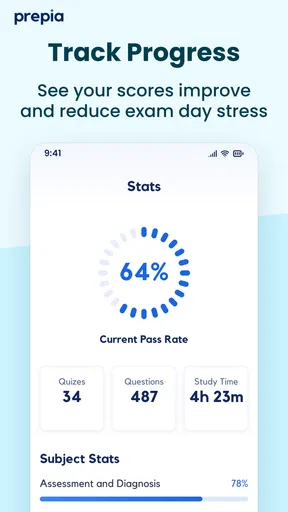
American Nurse Exam Prep 2026 is a study app designed to help nursing students and candidates prepare for U.S. nursing examinations, particularly the NCLEX-style format. It typically provides practice questions, explanations, topic-based quizzes, mock exams, and progress tracking. The app is intended as a supplementary learning tool and should be used alongside official exam guidelines, textbooks, instructor support, and current nursing resources.
Is American Nurse Exam Prep 2026 suitable for NCLEX-RN and NCLEX-PN candidates?
The app may be useful for both NCLEX-RN and NCLEX-PN preparation, but users should carefully check the selected study mode and the subjects included in their version. RN and PN examinations have different scopes and expectations. Before relying on the app, compare its content with the current test plan published by the official nursing examination authority and confirm that the questions match your intended license examination.
What study features does American Nurse Exam Prep 2026 offer?
The application generally focuses on interactive practice rather than passive reading. Depending on the available version, you may find timed quizzes, full-length practice tests, category-based questions, answer explanations, performance statistics, bookmarks, and review tools for missed questions. These features can make it easier to identify weak areas and create a regular study routine, although the quality and depth of explanations should be evaluated before replacing other preparation materials.
Can I use American Nurse Exam Prep 2026 without an internet connection?
Offline availability depends on the app version and the specific content you download. Some applications allow previously loaded question banks or study modules to be used without an internet connection, while other functions, such as synchronization, advertisements, account access, or progress backups, may require online access. Check the app’s current store description and test the main features after installation, especially if you plan to study while traveling.
Is American Nurse Exam Prep 2026 free to download and use?
The application may be free to install while offering optional purchases, subscriptions, advertisements, or locked premium question sets. The exact pricing, trial period, renewal terms, and available features can vary between Android and iOS and may change over time. Review the store listing and in-app purchase screen carefully before subscribing. Also confirm whether your progress and purchased content remain available if you change devices or cancel a plan.


